
Should EAs Looksmaxx?
It's worth thinking about, at least.

0. Introduction
(Epistemic status: uncertain. This is a very rough sketch of an idea that popped into my head a few days ago while scrolling reels. Effort: mid-low. I spent a few hours probing Claude and reading articles, but by no means conducted a comprehensive review of relevant lit. )
Looksmaxxing is the ideology that physical attractiveness is the master variable behind basically all life outcomes. Your career, your income, and whether anyone will ever love you mostly comes down to your face. The good news? Anyone can ascend from horrifically unattractive to one of the elite few. The distribution isn’t fixed.
Now, when I first encountered this, my reaction was the same as yours: this is obviously and deeply unserious. Caring about something as superficial as physical attractiveness seemed shallow as someone who concerns himself with Important Things™️.
But then I thought about it for a bit and realized that this is actually super important. If the looksmaxxers are right, then everybody should radically alter their priorities to become as attractive as possible, as quickly as possible. Any goal becomes exponentially easier if you're staggeringly attractive (a “True Adam,” in their language). If you’re an EA, you’d have an easier time convincing people to care about the shrimp if you looked like Matt Bohmer than Jabba the Hutt.
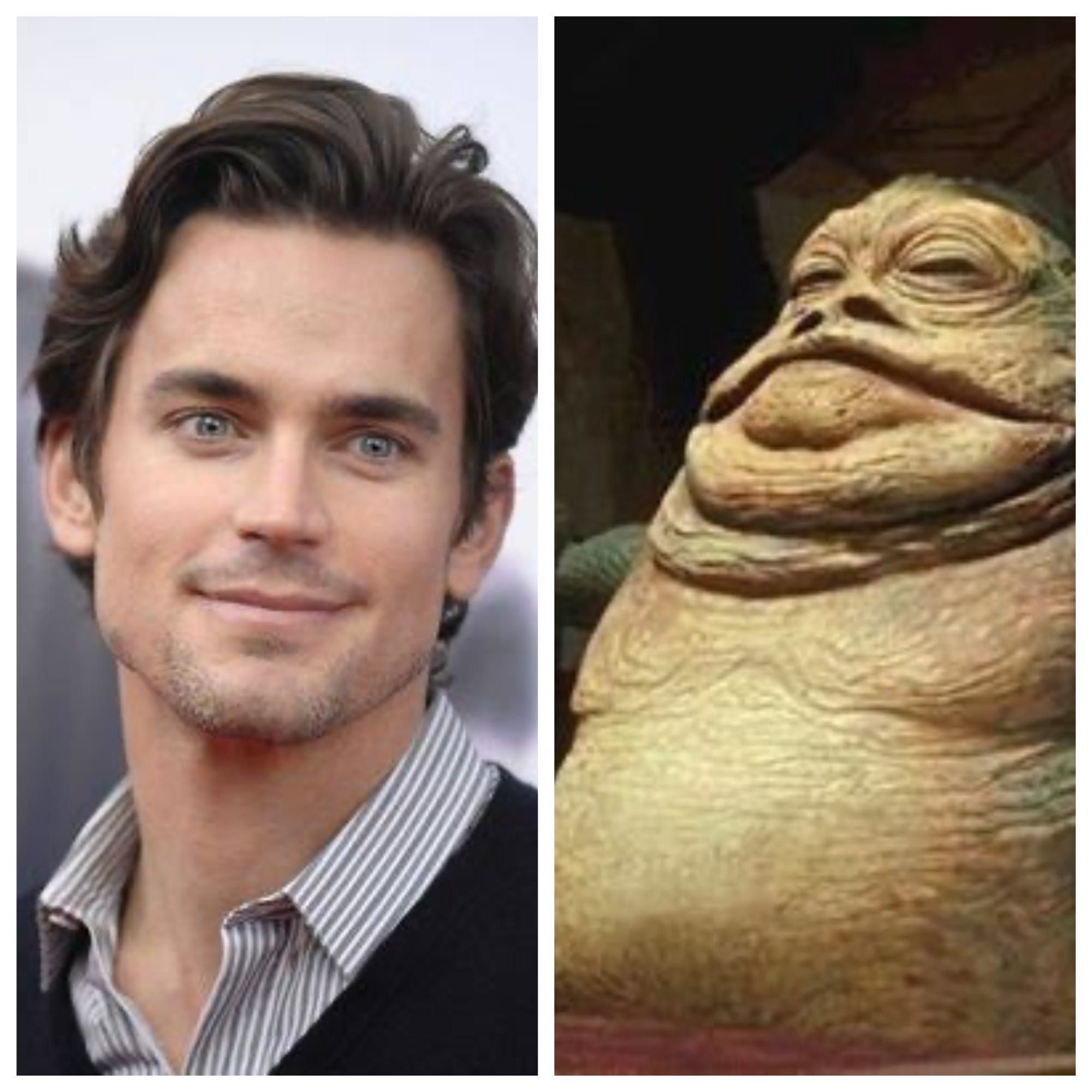
And yet! After an extensive survey of the literature (a search on LessWrong for “looksmaxxing”), I found only a single post dedicated to the subject: a short article from Taylor G. Lunt titled “I Spent 30 Days Learning to Smile More Charismatically.” For reference, there are dozens more posts about acausal trade with hypothetical aliens.
Thus, I want to consider the question: have rationalists unfairly neglected looksmaxxing?
To figure this out, we need to establish two things:
Importance. Do looks matter, and how much?
Tractability. Can attractiveness be meaningfully improved, or is it mostly genetic luck?
I'll start with a working definition, then survey the empirical literature on looks and life outcomes, then turn to tractability.
I. What is Looksmaxxing?
Collins Dictionary1 defines looksmaxing as
noun attempting to maximize the attractiveness of one’s physical appearance
That sounds reasonable enough. The New York Times2 explains that there are actually two types of looksmaxxing:
Softmaxxing — “normal” interventions that are low-cost, reversible, and broadly socially acceptable: diet, exercise, skin-care, sleep, etc.
Hardmaxxing — higher-cost, riskier, or more invasive interventions: steroids, peptides, cosmetic surgery (rhinoplasty, jaw surgery, blepharoplasty), and so forth.
It’s the latter that has gained a lot of public scrutiny recently. “Bonesmashing” and its neighbors have been mocked ruthlessly online, mostly fairly. But the failure of the extreme fringe doesn’t indict the broader question. My goal here is only to ask whether this is something worth caring about. What to actually do about it is a separate post.
II. Importance
Let’s start with the most defensible part of the looksmaxxing ideology: looks actually do matter, and we have converging evidence from several independent fields to prove it.
Labor Economics
Daniel Hamermesh is an economist at UT Austin who has spent a career being professionally unpopular by studying the economics of beauty. His 2011 book found that attractive workers earn roughly $230,0003 more over a 40-year career than unattractive workers, controlling for other variables. Adjusted for inflation that's around $344,000.
For context, the college wage premium, which people organize their entire adolescence around, is in the same ballpark. We treat one of these as an obvious life priority and basically ignore the other.
You’re probably worried about confounding variables—maybe attractive people are also more confident, or more intelligent, or come from wealthier families that invest more in their appearance. This is reasonable, but wrong.
By isolating the impact of facial attractiveness from other a litany of other variables including intelligence and confidence, a longitudinal study4 in The Review of Economics and Statistics found an independent positive correlation with greater earnings. To quote the conclusion:
There is a durable, persistent, and economically large correlation between the facial attractiveness of men, as measured by their high school yearbook photos and their earnings in their mid-30s and their early 50s. The magnitude and significance of the correlation are similar whether we condition only on IQ or on an extensive set of characteristics, including family background, educational attainment, household characteristics, and occupational choices. (Scholz & Sicinski, 2015)
One caveat: the Scholz study was men only, so we don’t know how cleanly this generalizes across genders. The broader literature suggests the effect exists for women too, but with some complications around weight and grooming norms that I’ll set aside for now.
The ‘Halo Effect’
The labor market effects are downstream of something more fundamental, which is that humans are running a systematic cognitive distortion on each other constantly.
Over the years, extensive research has been done on the Halo Effect, defined as follows:
A cognitive bias that leads people to associate one positive trait (physical attractiveness) with other positive traits like intelligence, kindness, and trustworthiness despite the fact that they are orthogonal to one another.
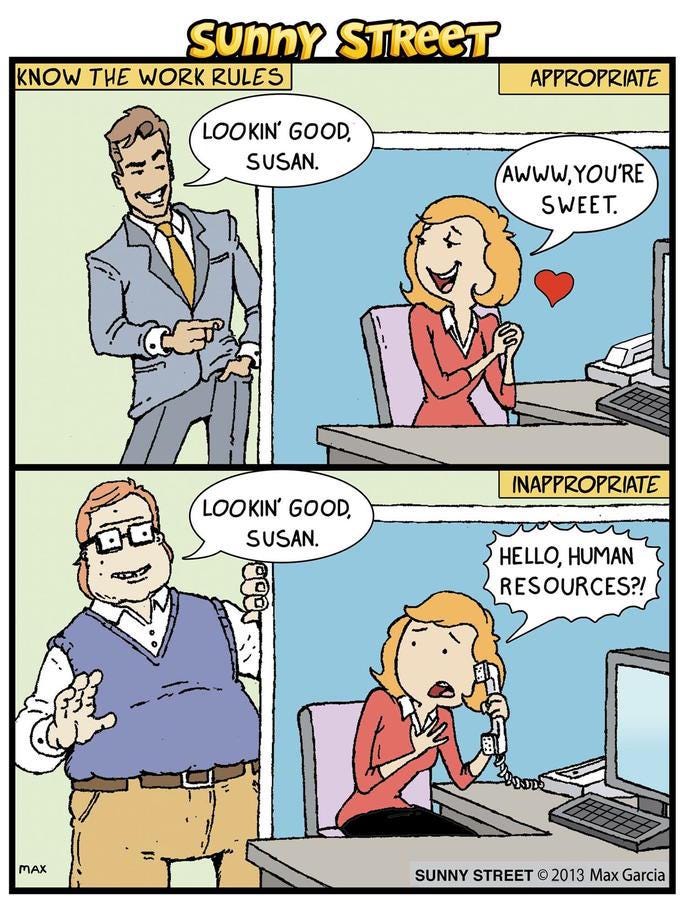
This effect is well documented in empirical research. Researchers at the University of Alberta summarized the scope of this work5:
The halo effect has been extensively researched in multiple fields, including social psychology, clinical psychology, behavioral psychology, child psychology, politics, and marketing (e.g., Cao et al., 2023; Fusaro, Corriveau, & Harris, 2011; Hartung et al., 2009; Naquin & Tynan 2003; Teneva, 2020; Zeigler‐Hill, Besser, & Besser, 2019). This work has demonstrated that the halo effect is not limited to human trait ratings but is also seen in ratings of food, wine, groups, and ideas (e.g., Apaolaza, Hartmann, Echebarria, & Barrutia, 2017; Iles, Pearson, Lindblom, & Moran, 2021; Naquin & Tynan, 2003). (Westbury & King, 2024)
The most striking demonstration comes from a 2024 study in Royal Society Open Science6. Researchers Aditya Gulati et al. constructed a data set of 462 people in two conditions: their normal appearance, and how they looked after applying an online beauty filter. 2748 people were asked to rate the same people twice on a Likert scale for intelligence, trustworthiness, sociability, and happiness. The beautified versions scored higher on every single attribute, with p < 0.001 across the board.
Think about what this means. The same person, filtered to look more attractive, is judged as more intelligent. More trustworthy. Kinder. The filter didn't change their intelligence, trustworthiness, or kindness. It changed a pixel distribution that the human visual system encodes as "attractive." That encoding then propagated across every independent trait judgment the raters made.
The picture that emerges from both lines of evidence is pretty coherent. Attractive people are perceived as having a suite of positive traits they may not actually possess. This makes other people more likely to hire them, trust them, buy from them, and promote them. The effect is large enough to rival the most significant human capital investments we know about.
(Confidence in the underlying effect: ~90%. Confidence that I've correctly characterized all the relevant complications: lower. I’m not an economist or psychologist by trade, so my understanding of these studies may be flawed.)
III. Tractability
Ok, great. We’ve established that looks matter. But is it tractable? This is where it gets a bit murkier.
Is it all genetics?
This is the “blackpill” ideology that looksmaxxers attempt to differentiate themselves from. It goes something like this:
P1. There is a genetic foundation of attractiveness.
P2. You are either genetically blessed or cursed. There’s nothing you can do about it.
C. Inceldom.
Most people, myself included, are inclined to reject this fatalistic worldview on face. We have good reason to. Most incel forums proliferate pseudoscientific slop to justify their beliefs. That said, they aren’t completely wrong (just mostly).
To their credit, Premise 1 is largely true.
Research has found a genetic basis for beauty. A 2013 twin study published in the journal Behavior Genetics found that facial attractiveness is between 50-70% heritable7, though they note some cross-gender variation.
Another 2019 study8, published in PLOS Genetics, also found a correlation with a huge sample size (4,383 people) using data from the Wisconsin Longitudinal Study. The dataset included both attractiveness ratings coded on a 11-point scale and extensive genotype mapping of participants. The researchers compared the genotypes of the most attractive people, and found positive correlations between some single-nucleotide polymorphisms (small genetic variations) and facial attractiveness (Hu et al., 2019).
Premise 2 is where the incel thesis starts to falls apart. From what we just learned, ~30-50% of your attractiveness can be changed. That’s pretty good news! It’s certainly enough to disprove that some people are just “doomed” from the start. Lots of research has supported the benefits of small, targeted interventions on attractiveness. To list a few:
Body composition — effect on attractiveness is real and large, especially facial adiposity (face fat is a significant attractor variable independently of body fat).
Grooming — obvious, large effect, low cost. Controlled studies on before/after attractiveness ratings confirm this.
Posture — affects perceived height, dominance, health. Very tractable.
The more nuanced take goes something like this: interventions like skincare and haircuts can result in noticeable improvements in your attractiveness. However, morphological factors like facial symmetry, bone structure, and interpupillary distance are hard limits on potential that can only be altered via surgery9. You can only optimize up to a fixed cap.
You, as a reasonably smart reader, will point out that this isn’t a reason not to reach that ceiling. All of the data presented in part II of this article is linear, not binary. Every degree of improvement helps, though you should consider tradeoffs.
But what about [this absurd thing I saw on TikTok]?
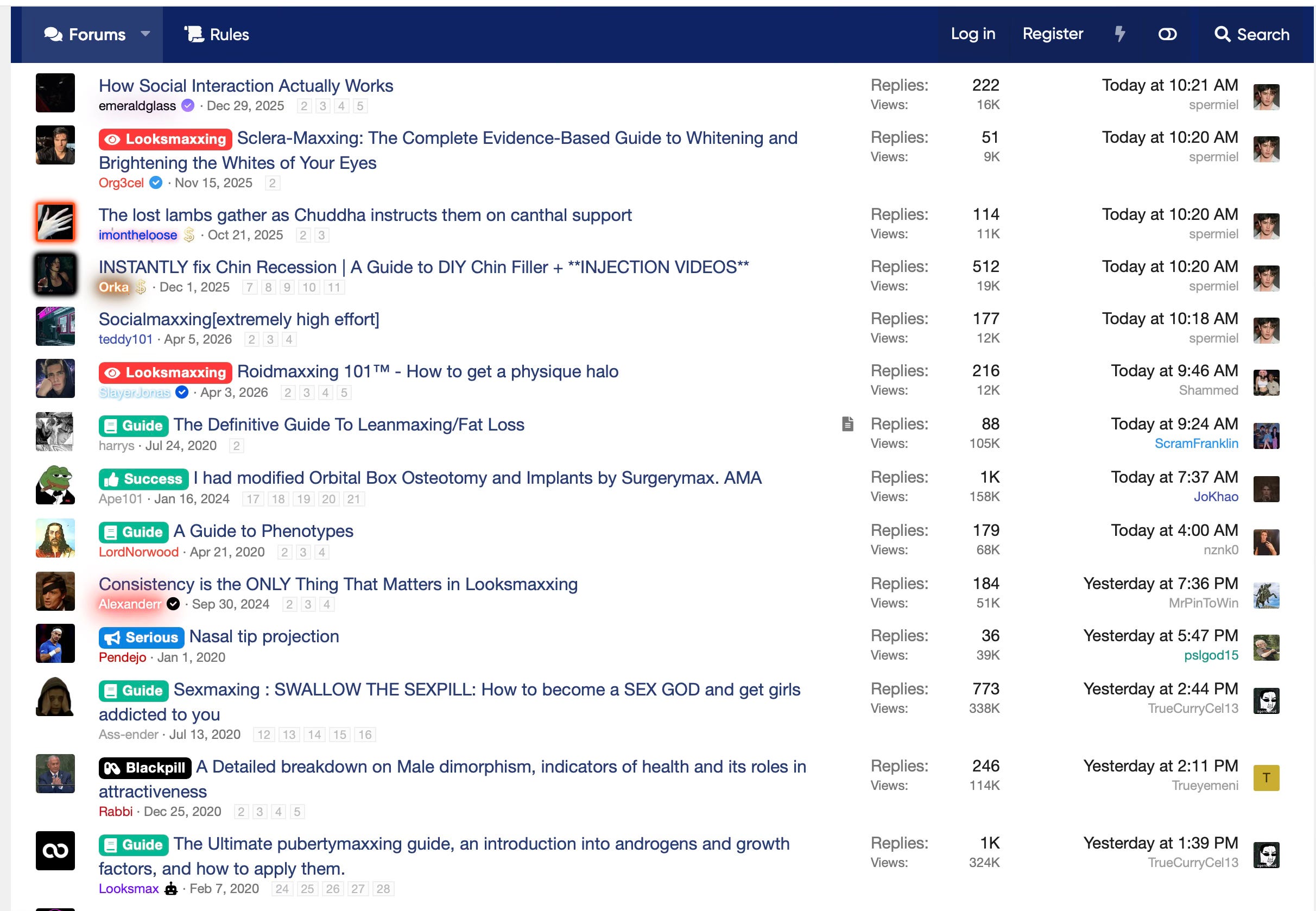
A lot of the “methods” that looksmaxxing influencers are either useless or, in some cases, actively dangerous. Mewing, the practice of attempting to remodel your jaw structure via changes in tongue posture, is biologically implausible. Bonesmashing is based on a misapplication of Wolff’s Law that can result in irreversible harm, especially when done with imprecise, blunt-force objects. A recent report in The New Yorker found that many peptides sold online were dangerous fakes.
There’s an interesting asymmetry: the cheap interventions (often branded “cope” by extreme looksmaxxers) are what actually generate provable results, while expensive and risky ones have the least support and the greatest variance in outcome.
This leads me to believe that the looksmaxxers are directionally correct, but miscalibrated. The community’s energy disproportionately (and mistakenly) flows toward the exotic and pseudoscientific.
IV. Concluding Thoughts
Q: So, should rationalists looksmaxx?
A: Maybe, it depends.
It’s clear by now that a) looks matter and b) you can do something about them. What’s less certain, however, is how effective the targeted interventions promoted by looksmaxxers are.
Even for proven, safe treatments, a 2015 report in IZA found that for the majority of people, “the monetary benefits of plastic surgery, medical treatments to increase height, and expensive clothing are not worth the cost.” This may be especially true when you consider the counterfactual case of spending that money on effective giving.
Still, I think that this is a neglected idea worth further examination. The fringe cases don’t justify writing it off altogether.
https://www.collinsdictionary.com/us/dictionary/english/looksmaxxing
https://www.nytimes.com/2023/11/06/style/looksmaxxing-tik-tok-dillon-latham.html
Hamermesh, D. S. (2011). Beauty Pays : Why Attractive People Are More Successful (pp. 46–47). Princeton University Press.
Scholz, J. K., & Sicinski, K. (2015). Facial Attractiveness and Lifetime Earnings: Evidence from a Cohort Study. Review of Economics and Statistics, 97(1), 14–28. https://doi.org/10.1162/rest_a_00435
Westbury, C. and King, D. (2024), A Constant Error, Revisited: A New Explanation of the Halo Effect. Cognitive Science, 48: e70022. https://doi.org/10.1111/cogs.70022
Gulati, A., Martínez-Garcia, M., Fernández, D., Lozano, M. A., Lepri, B., & Oliver, N. (2024). What is beautiful is still good: the attractiveness halo effect in the era of beauty filters. Royal Society Open Science, 11(11). https://doi.org/10.1098/rsos.240882
Mitchem, D. G., Purkey, A. M., Grebe, N. M., Carey, G., Garver-Apgar, C. E., Bates, T. C., Arden, R., Hewitt, J. K., Medland, S. E., Martin, N. G., Zietsch, B. P., & Keller, M. C. (2013). Estimating the Sex-Specific Effects of Genes on Facial Attractiveness and Sexual Dimorphism. Behavior Genetics, 44(3), 270–281. https://doi.org/10.1007/s10519-013-9627-5
Hu, B., Shen, N., Li, J. J., Kang, H., Hong, J., Fletcher, J., Greenberg, J., Mailick, M. R., & Lu, Q. (2019). Genome-wide association study reveals sex-specific genetic architecture of facial attractiveness. PLoS Genetics, 15(4), e1007973. https://doi.org/10.1371/journal.pgen.1007973
Some interventions, like rhinoplasty and orthognathics (jaw surgery) are actually quite routine and can meaningfully improve facial harmony. Others are more dangerous.